


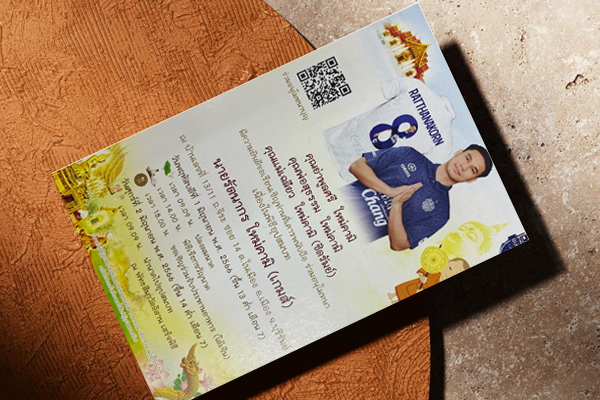
Invitation Card: Design, RSVP & Printing Guide
An invitation card is a medium used to invite guests to an event. It can be printed on paper or delivered digitally, and should clearly present the host, event details, date, time, venue, RSVP channel, and any special instructions.
Invitation cards help communicate event information in a clear and professional way. A well-designed invitation should make it easy for guests to understand the event, confirm attendance, and prepare for the occasion.
What Is RSVP?
RSVP comes from the French phrase répondez s’il vous plaît, meaning “please reply.” It is used to ask recipients to confirm whether they will attend an event.
| English wording | Meaning |
|---|---|
| RSVP by 15 December | Please confirm whether you will attend by 15 December. |
| Please RSVP | Please reply to confirm whether you will attend. |
| Regrets only | Reply only if you are unable to attend. |
RSVP details may include a deadline, phone number, email address, or registration link so guests can respond easily.
Common Types of Invitation Cards
Invitation cards can be designed for many occasions, from formal ceremonies to corporate events and online campaigns.
- Ceremonial invitation cards: Weddings, merit-making ceremonies, and housewarming events; usually printed on thick card stock with envelopes.
- Corporate invitation cards: Meetings, seminars, product launches, and CSR events; suitable for printed cards, email, or PDF delivery.
- Personal invitation cards: Birthdays, graduation ceremonies, and children’s parties; available as digital cards or small printed cards.
- Store or brand invitation cards: Campaigns, grand openings, and VIP events; often use premium printed cards or QR codes.
- Online invitation cards: Sent through LINE, Facebook, email, or websites as images, PDFs, or registration links.
Structure of a Good Invitation Card
A clear invitation card should present essential information in a logical order, making it easy for guests to read and respond.
- Header: The invitation phrase or event name, such as “You are invited to…”
- Key details: Host name, date, time, venue, map, or QR code.
- RSVP information: Contact channel, registration link, and RSVP deadline.
- Requirements: Dress code, parking information, dietary restrictions, or items to bring.
- Graphic elements: Logo, brand colors, images, icons, and a scannable QR code.
Design and Printing
Choose a size and format that suits the event, such as A6, DL, a half-fold card, or a landscape card. Use a template from Canva or another design program, then customize the text, colors, fonts, images, and logo.
- Arrange information clearly: event name, date and time, venue, and RSVP details.
- Review the proof before printing, especially names, phone numbers, and links.
- Choose a delivery method: printed cards, PDF attachment by email, or an image/link shared through social media.
Paper and Printing Options
| Option | Recommended Use |
|---|---|
| 200–250 gsm art card | Suitable for general invitations; affordable and easy to print. |
| Coated or glossy paper | Suitable for weddings or premium events because it produces sharp, vibrant colors. |
| Folded cards | Provide more space for text, maps, and event programs. |
| Digital printing | Suitable for small to medium quantities and fast production. |
| Offset printing | Suitable for large quantities; colors remain consistent and the cost per piece decreases at higher volumes. |
| Finishing options | Gold foil, embossing, die-cutting, rounded corners, or special envelopes can add a premium feel. |
Sample Invitation Text
Invitation
You are invited to attend “Event Name”
Wednesday, 20 January 2026, at 6:00 p.m.
At the Main Conference Room, Building A
Please confirm your attendance by 15 January 2026.
Scan the QR code to register, or contact 08X-XXX-XXXX.
Important Tips
- ◉ Do not use too many fonts; use only 1–2 fonts per card.
- ◉ Leave a minimum margin of approximately 3–5 mm so text or logos are not cut off during trimming.
- ◉ Test every QR code and link after printing.
- ◉ For brand events, use the colors, logo, and visual style specified in the brand guidelines.
- ◉ Prepare a print-ready PDF file with bleed, and separate PNG/JPG files in appropriate sizes for social media.
Summary
A good invitation card combines clear information, attractive design, and the right printing method. Always check the name, date, time, venue, and link before sending or ordering printing, as these are the most important elements of an invitation card.
