


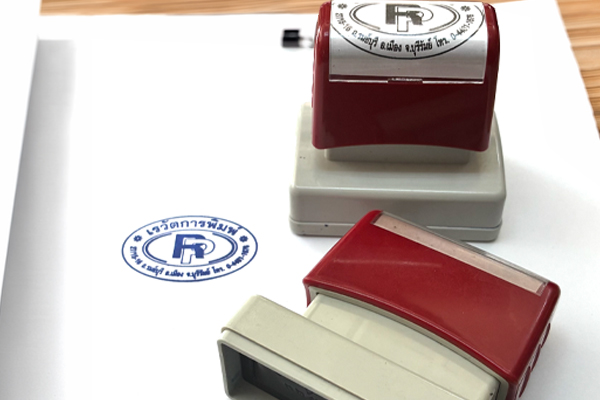
Rubber Stamp
A rubber stamp is a tool used to imprint text, logos, or symbols onto documents and various materials, helping to certify, indicate status, or mark items quickly and consistently.
What Is a Rubber Stamp?
A rubber stamp mainly consists of a rubber or polymer plate engraved with a design or text, a handle, and ink. When pressed onto paper or a suitable surface, it leaves an imprint according to the desired design.
It can be used in offices, shops, schools, and businesses—for example, to stamp “Received,” “Paid,” “Approved,” or a store logo onto receipts, envelopes, and packaging.
Popular Types
| Traditional ink-pad stamp | The rubber plate must be dipped into ink before stamping | Frequent use where ink amount needs to be clearly controlled |
|---|---|---|
| Self-inking stamp | Has a built-in ink pad; press once to stamp | Office work and high-volume documents |
| Pre-inked stamp | Ink is contained within the stamp; no separate ink pad needed | Convenient use and easy portability |
Pros and Cons 'Self-Inking Stamp' VS 'Traditional Stamp'
Self-Inking Stamp
-
Advantages
◉ Easy and fast to use, ideal for repeated stamping such as “Received,” “Paid,” or date stamps
◉ Convenient to carry because no separate ink pad is required
◉ Produces fairly consistent impressions and is less likely to smear -
Disadvantages
◉ Usually more expensive, and changing ink colors is less convenient
◉ If the ink pad dries out or the mechanism wears out, parts may need replacement
Traditional Stamp
-
Advantages
◉ Lower cost and durable; the rubber plate can last a long time
◉ Easy to change ink colors, suitable for work requiring multiple colors
◉ Allows control over the amount of ink, suitable for large designs or specialized work -
Disadvantages
◉ Requires carrying an additional ink pad and takes more time when stamping large quantities
◉ If too much ink is applied, the impression may smear or be uneven
Which Type Should You Choose?
- Choose a self-inking stamp if you stamp every day, such as for accounting, payment processing, or document approval, because it saves time and delivers consistent results.
- Choose a traditional stamp if you use it infrequently, need a large stamp, or frequently switch ink colors.
-
If you need especially dark impressions or work on special materials, traditional stamps usually offer a wider choice of inks and rubber plates.
How to Make a Rubber Stamp
- 1
Define the purpose, such as a company stamp, payment stamp, date stamp, or promotional stamp. - 2
Design the artwork and text, clearly specifying the name, logo, lettering, and size. - 3
Choose the size and shape; common options include round, square, and rounded-rectangle designs. - 4
Choose the stamp type and ink. Self-inking stamps are suitable for frequently stamped documents, while special inks may be used on glass, plastic, or wood. - 5
Send the file to a production shop. The shop usually renders or engraves the rubber/polymer plate based on the digital file. - 6
Test the stamp to ensure that the text is sharp, the position is correct, and the ink does not smear.
Proper Use
- • Place the document on a flat and stable surface before stamping.
- • Press the stamp straight down with even pressure, without tilting it, to ensure a complete impression.
- • For traditional ink-pad stamps, lightly dip the stamp in ink and test it on scrap paper before actual use.
- • For durable applications, such as labels or packaging, choose ink suitable for the material.
- • Close the ink cap and store the stamp away from direct sunlight or heat to extend its lifespan.
Practical Examples
A shop may create a “Paid” stamp with a date and use it on receipts to reduce handwriting time and make documents look more organized. An organization may use a “Document Received” stamp with a receipt number and date to record incoming documents systematically.
Important Precautions
- Company or official stamps should use accurate registered information, as they may be used to certify or indicate the status of documents.
- Avoid using symbols or text related to the monarchy or government agencies in business stamps unless you have the right or permission to do so.
- A rubber stamp does not replace a handwritten signature or legal certification in every case. Check the requirements of the relevant agency or contracting party before use.
- Store the stamp securely, as it could be used to forge documents if lost.
