


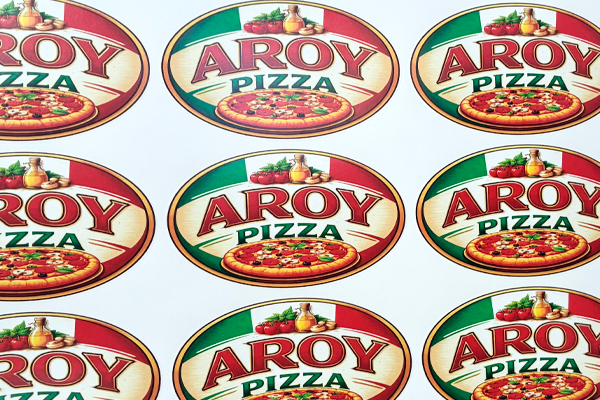
Label stickers are stickers used to display product information, such as the product name, ingredients, expiration date, barcode, or logo.
Die-cut stickers are stickers cut to a custom-designed shape; they do not have to be square or round only.
Kiss-cut stickers are cut only the sticker material, while the backing paper remains intact
What’s the Difference?
| Type | Characteristics | Best Uses |
|---|---|---|
| Standard label stickers | Focus on displaying product information; usually standard shapes such as squares or circles | Bottle, jar, and box labels; food, cosmetics, and products that require complete information |
| Die-cut stickers | Can be cut into any shape following a logo, text, or graphic | Brand logos, giveaway stickers, envelope seals, gift items, and labels that need to stand out |
| Kiss-cut / Half-cut stickers | Only the sticker material is cut, while the backing paper remains intact | Product labels that need to be peeled and applied quickly; multi-sticker sheets; sticker sets |
Common Uses
- ◎Packaging labels: Applied to water bottles, cream jars, snack boxes, or cosmetic products to display the name, ingredients, and important information.
- ◎Brand logo stickers: Die-cut stickers can be cut to follow the logo shape, making the brand identity clearer and giving a more premium look.
- ◎Parcel or gift-box seals: Help seal packages and add credibility to product deliveries.
- ◎Giveaways and souvenirs: Fully die-cut stickers are individual pieces, making them easy to hand out or apply one at a time.
- ◎High-volume use: Kiss-cut stickers are ideal for labels that need to be peeled and applied quickly, because they remain on the same backing sheet.
How to Choose
- If you need complete product information and easy application, choose kiss-cut label stickers.
- If you need a custom shape based on your logo or campaign, choose fully die-cut stickers.
- If the product will be exposed to moisture, such as beverages, food, or cosmetics, choose waterproof PP or PVC material.
PP vs. PVC Stickers
PP stickers are suitable for product labels that need sharp, premium-looking, waterproof printing.
PVC stickers are better for applications that require stretching, squeezing, curved surfaces, or outdoor use.
| Property | PP Stickers | PVC Stickers |
|---|---|---|
| Appearance | Thin, smooth, and premium-looking | Thicker, tough, soft, and highly flexible |
| Printing | Sharp images and attractive colors; ideal for design-focused labels | Sharp printing, but its main advantage is durability rather than appearance |
| Flexibility | Less flexible; suitable for flat or slightly curved surfaces | Highly flexible; works well on curved bottles, squeeze tubes, or textured surfaces |
| Water resistance | Excellent; suitable for refrigerated products or moisture exposure | Good, but not ideal for prolonged soaking in water |
| Heat resistance | Better; some grades can withstand around 90°C | Generally around 40–60°C |
| Sunlight / UV resistance | Suitable indoors or for short sun exposure | Better; suitable for outdoor use and resistant to sun and rain |
| Price | Generally more affordable | May be more expensive for special durable grades |
Which Material to Choose?
- Choose PP for cosmetic labels, refrigerated food, beverages, or products that need attractive, sharp, waterproof labels.
- Choose PVC for squeeze tubes, curved bottles, car stickers, outdoor signs, or labels exposed to frequent sunlight, rain, and abrasion.
- Choose PPfor indoor product labels that need a premium appearance,
- Choose PVCfor durability and flexibility.
