


Running Bibs: Which Type Should You Choose? Understanding Materials and How to Order
What Is A Running Bib And Which One Should You Choose?
When choosing running bibs, consider five main factors: material, number visibility, usage format, information to be printed, and budget. You should also consider whether the event is a road run, trail run, charity walk-run, or a timed competition, as each event has different requirements. If you need bibs that can withstand sweat and moisture, compare suitable materials before placing a production order. For events where bib numbers must be readable from a distance, pay special attention to number size and information layout.
A running bib is a runner’s identification number tag worn on the shirt during a race. It helps identify participants, distinguish race categories, and display necessary information according to the event format. Some events also use bibs together with a timing chip to record race times.
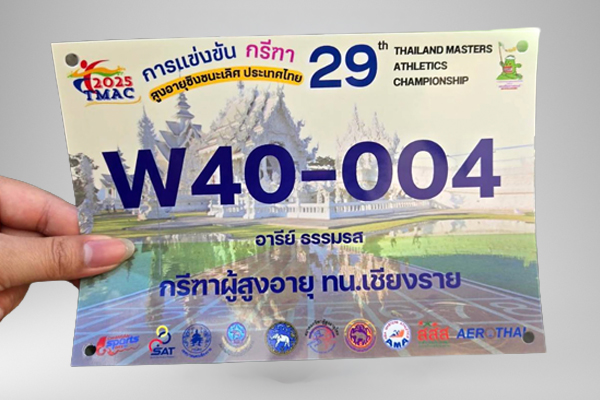
Caption: ตัวอย่างบิบแยกระยะด้วยสี
What Are the Functions of a Running Bib?
A running bib is not only for displaying a number; it also helps make race management and runner support more organized. Its main functions include:
- Identify runners:Display the participant number assigned by the organizer, making it easier for staff to identify each runner.
- Separate race categories:Use colors, designs, or text to distinguish race distances, competition groups, or age categories.
- Support timing systems: For events using timing chips, check the bib format and chip placement to ensure they meet the timing provider’s requirements.
- Assist on-site operations:Easy-to-read numbers help staff and photography teams identify runners more easily.
- Display essential information:Bibs may include the participant’s name, event name, sponsor logos, or other information requested by the organizer.
However, adding a large amount of information does not always make a bib more effective. Prioritize the main number so it is clearly visible first, then add supporting information only as needed.
How Many Types of Running Bibs Are There, and How Do You Choose?
Running bibs can be categorized by material, usage format, and race requirements. No single material is suitable for every event.
| Waterproof paper bib | General running events that need printed number tags | Actual water resistance, durability, and tear resistance of the material |
|---|---|---|
| Polyplex PET Film bib | Events considering film materials for number tags | Flexibility, print suitability, and installation |
| Timing bib | Races that use timing systems | Chip requirements, placement, and system testing |
| Custom-designed bib | Events that need unique branding or specific information | Graphics, colors, logos, and number visibility |
Rewat Printing states on its website that it produces sports event bibs, with material options including waterproof paper and Polyplex PET Film, along with design and number arrangement services based on the information provided. Before choosing a material, request samples or detailed specifications from the manufacturer, because “waterproof” does not necessarily mean the material can withstand soaking, abrasion, or pulling equally well.
Which Running Bib Material Should You Choose?
Choose based on the race environment and actual usage conditions, rather than relying only on the material name.
Comparing Waterproof paper bib with Polyplex PET Film
| Material | Waterproof paper bib | Polyplex PET Film |
|---|---|---|
| Best for | Events that need printed number tags | Events considering film materials for number tags |
| What to check | Moisture resistance, tear resistance, and print clarity | Material grade properties, print suitability, and how the bib attaches to clothing |
| Limitation | Paper properties vary by grade, so do not assume all types offer the same durability | Do not assume durability or suitability for all race conditions without checking the actual specifications |
|
Before Ordering |
Request samples and detailed material specifications from the manufacturer. |
Request samples and detailed material specifications from the manufacturer. |
Waterproof Paper
This is an option worth comparing for events that need printed number tags. Ask the manufacturer about moisture resistance, tear resistance, and print clarity. Its limitation is that paper properties can differ by grade, so you should not assume that every type is equally durable.
Polyplex PET Film
This is a film material option for bib production. Check the properties of the material grade offered by the manufacturer, including its suitability for printing and how the bib attaches to clothing. Its limitation is that you should not assume its durability or suitability for every race condition without reviewing the actual material specifications.
Before placing an order, ask the manufacturer at least these three questions:
- 1How water-resistant and tear-resistant is the proposed material?
- 2How suitable is it for outdoor races or routes with high humidity?
- 3Can samples be provided for testing before mass production?
How to Design a Running Bib for Easy Reading
The key is to make the runner’s number clearly visible without letting logos or supporting text overpower it. Recommended design guidelines include:
- Place the number in a prominent position with clear space around it.
- Choose text and background colors with sufficient contrast.
- Use easy-to-read fonts; avoid decorative styles that make numbers confusing.
- Arrange sponsor logos appropriately within the available space.
- Check the clarity of text and images before final production.
- Print a sample to check number size and colors.
If you need to distinguish several race categories, use a simple color or text system and confirm its accuracy with the event team before production. For artwork files, clearly agree with the manufacturer on the accepted file format, dimensions, and how runner number data should be submitted. This helps reduce file-revision issues during production.
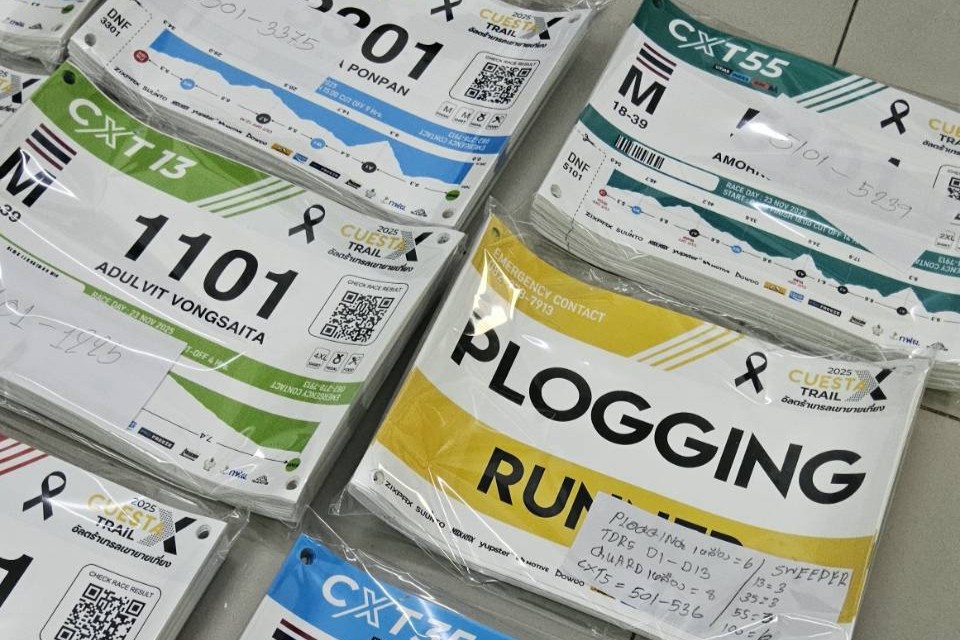
Caption: ตัวอย่างบิบแยกระยะด้วยสี
How to Choose a Running Bib Manufacturer
Compare manufacturers based on material suitability, clarity of job details, and their ability to manage data—not price alone. Before deciding, check the following:
- Do they offer materials suitable for your race format?
- Can they print sequential numbers and personalized information?
- Do they provide samples or images of previous work?
- Can they send samples for review before mass production?
- Do they have a design-approval and data-checking process before printing?
- Do they clearly state delivery times and costs?
- Do they support delivery to the event venue?
Rewat Printing provides information about sports bib production on its website, along with portfolio examples and contact channels for inquiries. Organizers can use this information as a starting point to ask about specifications and request quotations that match their event needs. Reference website: https://rewat.in.th/running-bib-1
How to Choose the Right Running Bib for Your Event
Choosing a running bib should start with the race objective, usage conditions, suitable material, printing format, and information to be displayed. Do not consider price alone, because number visibility and material durability directly affect real-world use on race day.
Before placing a production order, check the design files, number sequence, quantity, and delivery schedule. If your event uses a timing system, also confirm the chip requirements and installation process with the relevant timing service provider.
Are you organizing a running event? If you need running bibs designed to suit your race format, contact Rewat Printing to ask about materials, production options, and request a quotation. Provide the required quantity and usage date to support an accurate estimate. Rewat Printing offers printing and event production services, with product information and contact details available on its website.


